Sunday, 27 June 2010

Travel Safety-- WE ARE Passengers Not Prisoners


I want to share a little website with you than my old friend Ian put together, Passengers Not Prisoners. I think any traveler will relate to it. Ian's an anger-management and conflict resolution counselor and lecturer. He's way into violence prevention and is always on the road speaking at shelters, schools, hospitals, clinics, and drug-treatment programs. (He's also a record producer and concert promoter.) This is the intro he wrote for Passengers Not Prisoners:

�(Don�t) stay in your place.�

Freely exercise the right to travel, and more fully know your world and that it is almost invariably a safe place. The vast majority of the people on the planet are not benevolent, they are simply indifferent to you.

The world is not becoming more dangerous, it is becoming safer. A person was six times more likely to be murdered in the Middle Ages than today. It is just that today, through the mass-media, we hear about more instances which leads to a distorted sense of jeopardy.

People invariably only attack one category of victims: those that they feel deserve it. Out of the over 6-billion people alive today, they have better people to harm than you so the key is to not give them a reason to do it. (Even among those incarcerated for violent crimes, in study after study it has consistently been found that less than 6 percent of them can be clinically classified as sadistic.)

Aggression is communication, arguably the first act of communication. All individuals, no matter how wrong they may be, at the moment of action believe that they are right. Counter-attacking only leads to an intensification of conflict and a greater sense of isolation and opposition. Empathy (emotional understanding of others) and education are the most potent antidotes to softening adversarialism.


I've been traveling since I was 16 years old, when I tried to hitch hike to Miami Beach from Brooklyn to spend Pessach with my grandparents. Two years later I succeeded in hitching to Los Angeles, where I stowed away on a ship headed for-- in a roundabout way-- Tonga. I still haven't gotten to Tonga... but I'm workin' on it. Meanwhile, all of what Ian is talking about is the kind of stuff I've experienced first hand-- walking around in "wild" places, from Timbuktu and Cairo, East Jerusalem, Tangier, Kandahar, Katmandu, Tehran, East Berlin (back in the day), Mexico City, the slums of Bombay, Calcutta, Istanbul... and, yes, it all seemed mighty safe.

On the other hand, sometimes it seems like the ruling elites are discouraging travel and drumming up divisiveness across the world. Ian addresses it as Homeland Insecurity:

A fundamental confusion seems to have occurred. The government and the entire transportation industry exists because of us. They work for us (the citizens), we do not work for them. The harassment and systematic subjugation of innocent and law-abiding individuals must stop.

Positive change almost always fails because of the inability of a system to admit its own failure, instead amplifying the intensity of what it is already doing rather than truly changing course, and, thus, compounding the original error.

Raise the bar higher and the competition inevitably rises as well. Feeling secure does not equal true security. Some risk will always exist. We will never have (�and never have had) total world peace. All that we can strive for is ever-increasing relative peace. 80 percent of the resources should not be spent attempting to control the ultra-exceptional (i.e., far less than 1 percent of instances) that by their very unique and extreme nature are unpreventable.

Clearly, the next terrorist attack will come from within the system designed to prevent it. As the system grows larger and the number of employees goes up, so does the exposure, as well as standards and ability to supervise going down.


UPDATE: Airline Food-- Worse Than You Thought

It's kind of been a truism of air travel for decades that the food isn't too good-- although in international first class it kind of is. But do the roaches and bacteria know first class from steerage? FDA inspectors found a host of health violations in recent inspections of the 3 major airline catering facilities (serving Delta, American, United, US Airways and Continental). The conditions for the food prep were rated "unsanitary and unsafe."
The FDA reports say many facilities store food at improper temperatures, use unclean equipment and employ workers who practice poor hygiene. At some, there were cockroaches, flies, mice and other signs of inadequate pest control.

Friday, 18 June 2010

10 Most Well-Known Addresses in the World


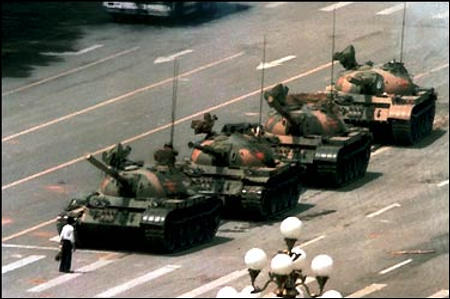
Sheryl Owen asked me to share a post, 10 Most Well-Known Addresses in the World from her blog here. The first thing that struck me off about it was that the 4th best known address in the world, and the first outside of the U.S., was 221B Baker Street in London, home of the Sherlock Holmes Museum. I used to have an office in London down the street from there. I would pass it every day. It was never all that busy-- not in the mornings, not at lunch time, not in the evenings, not in the summer and not in the winter. It wasn't deserted. It just wasn't a big deal. And it's better known than 10 Downing Street? And no Kremlin? Tiananmen Square? Masjid al-Haram, home of the Kaaba? The UN? [UPDATE: Bruce Tenenbaum e-mailed me three minutes after this was posted and asked where the Taj Mahal is on the list. Good question.]

Well, thank God there's nothing in Las Vegas listed. My next stop is Marrakesh and I would have thought the Djemaa el Fna would at least be as well known as... 221 B Baker Street. Their post:

We thought it would be interesting to put together a list of the 10 most popular and/or well-known addresses in the World. Now the tenants in several of these addresses (at least #1) change on a regular basis, but the fact that these addresses are significant does not change. The structures and history surrounding each of these will keep them well known for years to come.

1. 1600 Pennsylvania Avenue, Washington DC-- This is the address where arguably the World�s most powerful man lives: the President of the United States. Known as the White House, it is located in Washington, DC and it is a national treasure.

2. 11 Wall Street New York, NY-- This is home of the New York Stock Exchange. Tourists travel here year-round to visit the charging bull statue and to take in the hustle and bustle of one of the financial centers of the world.

3. 350 Fifth Avenue New York, NY 10118-- This is where the previous world�s tallest building stands: the Empire State Building. It�s 102 stories high, and is a world-famous attraction for tourists and locals alike. In addition, it is featured in several Hollywood movies.

4. 221 B Baker St, London, England-- This is the address to the Sherlock Homes Museum (given the address in March of 1990). When the Sherlock Holmes series of books were written by Sir Arthur Conan Doyle, street numbers in London mostly stopped at 100 and even to this day the Museum�s address is out of sequence on the block. That didn�t stop it though from becoming one of the most popular addresses of all time.

5. Tour Eiffel Champ de Mars, Paris-- Paris�s number one attraction is this address where the Eiffel Tower stands. For tourists, going to Paris is never complete unless you�ve been here. At night, there are beautiful lights you can�t help but stare at.

6. 4059 Mt Lee Dr. Hollywood, CA 90068-- This is the exact address where the Hollywood sign stands. It�s a mountain, but is now a preserved site to prevent its destruction. It�s featured frequently in Hollywood movies as well.

7. Buckingham Palace, London, England-- The most famous place in the United Kingdom. This palace is where the royal family lives and is often a place of attraction because of its important and beauty. It�s very old and retains its classic yet elegant look.

8. Statue of Liberty, Liberty Island New York, NY 10004-- This is yet another attraction in New York, the Statue of Liberty. This is a symbol of America�s open arms and welcomed many immigrants into the country. It�s known around the world and a top tourist destination in the U.S.

9. Manager Square, Bethlehem, West Bank--The Church of the Nativity is located here and this is a very well known and holy site for Christians from around the World. This is cherished as the site where the baby Jesus was born and laid in the manger.

10. 2 Macquarie Street, Sydney-- This is the most popular place in Australia, the Opera House. Here, you can watch plays, operas, etc. and enjoy the beauty of the place at the same time. It�s a must-see if you�re in Australia and is no doubt the most recognized place in Australia.

It�s actually difficult to stop with just 10 famous addresses from around the World there are so many great places to go and visit and addresses that are extremely important to individual nations and to various religious groups. There are lots of honorable mentions from the Vatican to the world�s tallest building in Dubai, we hope you spend a few minutes to think about all the addresses that you think should be in the top 10 of the World.

Monday, 31 May 2010

Exploring Cape Town and the Winelands


-by Lindy Howard

If you're visiting Cape Town for the first time, you�re in for something completely different. This town that started off as an isolated supply post at the end of the world is now one of South Africa's largest, most colourful and thriving cities. Safaris, beautiful beaches, the winelands and a thriving metropolis can all be found fairly close to each other.

Victoria & Albert Waterfront

If you arrive by sea the first place you're likely to land is the Victoria and Alfred Waterfront, and that's as good a starting point as any.

The V&A is one of Cape Town's premier tourist and shopping districts, but it's not all for show. The surrounding port is still operative and you can watch the busy operations as you visit the V&A's hundreds of shops and cafes or the Two Oceans Aquarium.

Nelson Mandela Gateway & Robben Island

From the waterfront, you can head through the Nelson Mandela Gateway and board the ferry to Robben Island, where Mandela and many others spent years as political prisoners. And if a sea voyage is not on the agenda, take a stroll around and see Cape Town's iconic Cape Dutch architecture. It's an intriguing mixture of French, German, Dutch and British stylings unique to this part of the world.

The Cape Town Coastline

If aquatic pursuits are more your style, Cape Town's unique geography makes for an interesting day at the beach. The Atlantic waters to the west are substantially colder than the Indian Ocean to the east, and each one harbors different creatures. The Indian Ocean is perhaps better for diving and wildlife while the Atlantic coast has more developed residential areas and restaurants.

The Winelands

Ranging a bit further out can be rewarding as well. Within a short drive of Cape Town are the South African Winelands, a UNESCO recognized region where many exquisite wines are produced.

Whites, reds, German and French styles are all well represented here thanks to the region's rich colonial history and an extremely grape-friendly Mediterranean climate.

You can take one of many guided vineyard tours or set out on your own. Many visitors find that it's best to rent a car because public transit in Cape Town, while quite good by African standards, is still somewhat lacking. The Winelands spread out in a northeasterly direction from Cape Town and into the increasingly hilly terrain of the interior.

Constantia Valley, Franschhoek and Stellenbosch

Locals call this region the Boland, Afrikaans for "uplands." The Constantia valley region is home to some of the Winelands' oldest estates and poshest dining.

Go a little further and you'll find the origin of some of South Africa's best wines in the area around Stellenbosch, the oldest town in the country.

The Franschhoek region was once settled by the French, and this small town still hosts more than thirty farms. Many of the vineyards of the Winelands have excellent restaurants on-site, and almost all of them offer tastings and cellar tours.

Thursday, 13 May 2010

How Long Will It Take Arizona's Tourist Industry To Recover From The Republican Party Jihad Against Hispanics?


The U.S. has virtually no chance to bring home its bid to host the 2018 World Cup, officially submitted today, because of the anti-Hispanic police state created in Arizona by that state's off-the-rails Republican Party. And two major Mexican soccer teams, Club Am�rica and Club de F�tbol Pachuca, cancelled their July 7th match at University of Phoenix Stadium. That's because Arizona Republicans have been doubling down on their sociopathic jihad against Hispanic residents. As Austin joined San Francisco and Los Angeles in announcing a boycott of Arizona's new anti-Hispanic police state, tourist officials there are bracing for the worst. In Phoenix alone, David Krietor, a deputy city manager who is tracking the issue, said this week the city faces lost business worth about $90 million over the next five years. Debbie Johnson, president of the Arizona Hotel and Lodging Association, said a boycott might be disastrous for the state's more than 200,000 hospitality-industry workers. "We really don't need another hit," she added. As of April 30, the lodging association had identified 19 conventions canceled, worth an estimated 15,000 room nights, or $6 million. This is getting more and more serious and it's time to really wake up here. Yesterday when I was reading Sebastian Doggart's wonderful post on unindicted war criminal Condoleeza Rice and his reference to Martin Niem�ller's chilling 1940s-era poem, I couldn't help thinking about what the Republicans are doing to the state of Arizona. Original translation:

When the Nazis came for the communists,
I remained silent;
I was not a communist.

When they locked up the social democrats,
I remained silent;
I was not a social democrat.

When they came for the trade unionists,
I did not speak out;
I was not a trade unionist.

When they came for the Jews,
I remained silent;
I wasn't a Jew.

When they came for me,
there was no one left to speak out.


Arizona is getting out of hand. And it isn't about controlling the borders or controlling crime. It's pure fucking racism and narrow-minded, self-righteous bigotry. The accidental governor signed another hate-filled bill to tell Hispanics they're not welcome in Arizona, another piece of the Republican ethnic cleansing push. Latest to be banned: "ethnic studies."

HB 2281 bans schools from teaching classes that are designed for students of a particular ethnic group, promote resentment or advocate ethnic solidarity over treating pupils as individuals. The bill also bans classes that promote the overthrow of the U.S. government.

The bill was written to target the Chicano, or Mexican American, studies program in the Tucson school system, said state Supt. of Public Instruction Tom Horne.

School districts that don't comply with the new law could have as much as 10% of their state funds withheld each month. Districts have the right to appeal the mandate, which goes into effect Dec. 31.

Tucson Unified School District officials say the Chicano studies classes benefit students and promote critical thinking. "We don't teach all those ugly things they think we're teaching," said Judy Burns, the president of the district's governing board.

She has no intention of ending the program, which offers courses from elementary school through high school in topics such as literature, history and social justice, with an emphasis on Latino authors and history. About 3% of the district's 55,000 students are enrolled in such classes... Ethnic studies are taught at high schools and colleges nationwide, but the Tucson district officials say their 14-year-old program is unique because it's districtwide, offered to grades K-12, and can satisfy high school graduation requirements.


Yesterday the Los Angeles City Council, in a 13-1 vote (lunatic fringe nutcase Greig Smith from Simi Valley being the "1"), decided to ban travel and future contracts with Arizona over their anti-Hispanic policies.

During a morning-long debate on the resolution, council members compared Arizona�s action to Nazi Germany and the beginning of the Holocaust, as well as the internment and deportation of Japanese Americans during World War II. A new Arizona law, which will take effect July 23, will require police to determine whether people they stop are in the country illegally, which critics say will lead to racial profiling.

�Los Angeles the second-largest city in this country, an immigrant city, an international city. It needs to have its voice heard,�� said Councilman Ed Reyes, one of the resolution�s sponsors. �As an American, I cannot go to Arizona today without a passport. If I come across an officer who�s having a bad day and feels that the picture on my ID is not me, I can be � deported, no questions asked. That is not American.��


Even national Republicans (though not McCain) are embarrassed by the out and out racism-- they usually prefer it carefully cover-up-- and yesterday it was announced that the heavy favorite for the 2012 GOP Convention, Phoenix (who "had it in the bag") was suddenly replaced with Tampa, a very open and multi-ethnic, all-American city. As disappointed as they are, beleaguered Arizona tourism officials aren't even a little surprised. Tourism, one of the state's most important industries-- first because of the violence and now because of the racism, is in the crapper.
Hispanic civil rights groups are boycotting Arizona and urging others to do the same. Officials at the National Council of La Raza, one of the groups driving the boycott, had privately asked the RNC not to meet in Phoenix.

The city risks losing as much as $90 million in hotel and convention business over the next five years because of the controversy, according to city estimates released Wednesday. The state's hotel and lodging association has counted 23 canceled meetings for a loss of between $6 and $10 million. On Wednesday, Los Angeles became the largest city to join the boycott.

...Arizona Republicans, including Gov. Jan Brewer, have stood more solidly behind their immigration law as a necessary tool for dealing with illegal immigration. She has also pushed back against the boycott, particularly the call for Major League Baseball to pull the 2011 All-Star game out of the state.

MLB owners, who have not commented on the boycott, begin a two-day quarterly meeting in New York this week. No major action items are on the agenda, but advocates of the boycott hope it will be discussed.

"You have a sport that the Latino community loves, whether you are a recent immigrant or native born, Latinos see baseball at their sport," said Clarissa Martinez De Castro, the director of immigration and national campaigns at NCLR. "The question is: As a sport where do they stand?"

The MLB Players Association has come out in opposition to the law, as have the Phoenix Suns. The team wore its "Los Suns" jerseys last week specifically to push back against the state's law. The decision came from team owner Robert Sarver, who suggested the players wear their Noche Latina alternates.


Concert promoters are also starting to feel their business disintegrate, Cypress Hill being the latest band to cancel a show and announce support for a boycott of Arizona. There's no chance I will go to Arizona while these Republicans are doing this kind of thing. Blue America is also urging everyone to support the only federal elected official in the state who is standing with the Hispanic community, Rep. Ra�l Grijalva (D-AZ) at the One America page. Grijalva and his staff have been threatened-- with serious violence (one gunman has been arrested so far)-- and he has had to close down his constituent services offices in Tucson and Yuma. Arizona isn't behaving like its part of America. I bet we couldn't get the Mexicans to take it back though.

Meanwhile Faith in Public Life announced today that an �emergency delegation� of Bishops and prominent religious leaders from Arizona will fly to Washington tomorrow to ask Sen. John McCain and White House officials to set politics aside and take immediate action on comprehensive immigration reform.

These religious leaders-- who will also meet tomorrow with DOJ, DHS and other Members of Congress from Arizona-- are on the front lines of the immigration debate, as their state enacts Arizona SB-1070-- an extreme measure that will likely lead to increased discrimination and racial profiling, and penalizes families and faith communities already living in fear. This draconian legislation, which has been denounced by religious leaders from across the theological, political and ideological spectrum, demonstrates the urgent need for political leadership from Arizona�s Senators and the President to move on comprehensive immigration reform immediately-- before other states follow in Arizona�s footsteps.

Sunday, 9 May 2010

Planning A Trip To Morocco


Yesterday I booked my flights from L.A. to Marrakesh. Roland said it'll be his 5th trip there. It'll be my 14th! The first time I went I drove. Not from L.A.-- from Germany, where, in 1969, I had purchased a VW camper van, which became my home for several years, and drove around Europe, wound up in Spain, and then took a ferry, with the van, from Algeciras to Ceuta. (Algeciras is at the bottom of Spain and you can get a ferry to Ceuta, a lonely Spanish colony they haven't given back yet, or directly to Tangier, which is what I've always done since that first trip. Except when I take a plane-- which is what I'm doing this time. No carefree two-three months to drive around Iberia and Morocco this time-- just 3 week conventional holiday in Morocco. And in the old days, you had to more or less fly to Casablanca and then get to Marrakesh or Essaouira from there.

Now it's almost convenient to just fly directly to Marrakesh. I say "almost" because it's still a small regional airport and not many international flights-- other than charters-- go in and out. I found one on a subsidiary of Royal Air Moroc, Atlas Blue, which I had never heard of. But it flies from Heathrow to Marrakesh. The only thing I'll miss about Casablanca is Le Port de P�che, one of my favorite seafood restaurants anywhere, a consolation for anyone who is forced to travel to an otherwise must-to-avoid (more or less) Casablanca.

Anyway, today's New York Times Travel Section is all about Morocco. The raison d'etre for all that space is a music oriented piece on Essaouira, the wonderful seaport on the Atlantic Ocean I discovered after Marrakech back when I first started coming to Morocco. I knew Jimi Hendrix a little from New York and he was there too, taking a rest before going to play at the Isle of Wight Festival (where I was headed as well). Essaouira was a lot sleeper then than it is now. And now-- every June-- a guy I met years and years ago hosts a big (5 day long) music festival. It highlights gnaoua music which is a mixture of African and Arab musical traditions.

Unlike festivals staged, � la Woodstock, in muddy, middle-of-nowhere pastures, or worse, in vast, overheated football stadiums, the Gnawa�s setting, in a small, friendly and almost impossibly picturesque, wind-cooled seaside city, is as magical and mesmerizing as the music.

Roland's pissed off because the article on Eassouira doesn't mention any of the really great seafood restaurants they make the city one of the culinary capitals of the country. I'm delighted; the fewer tourists who have those places on their agendas, the more room for us when we're back the in a couple months. I'll do a more comprehensive guide to Essouira restaurants when we're there, meanwhile, suffice it to remember that it's the home of nutty, delicious argan oil.

Friday, 30 April 2010

Hungry? The 50 Best Restaurants In The World-- And The 100 Best... And Good Dining In L.A. Too

molecular gastronomy

Roland seemed pissed off yesterday when he told me that CNN reported that the new San Pellegrino list of the 50 best restaurants in the world was out and that there isn't one single Los Angeles restaurant on it. It probably didn't cheer him up any when I said that if Pellegrino expanded to the top 100, L.A. still would probably not make it. (I was right.) And the kinds of restaurants that Roland and I favor these days-- healthy ones-- don't even get considered. In fact, we were sitting in Life Food Organic when he mentioned it, munching tiramisu as delicious as anything we ate at Il Canto in Siena's Certosa De Maggiano Hotel-- only not harmful to our well-beings.

On the other hand, except for professional gourmands, who's eaten in as many of these restaurants as we have? The shock of Noma in Copenhagen being named the best restaurant in the world over El Bulli in Roses, Spain came as a bit of a shock-- although probably more to Ferran Adri� than to us-- but neither of us is that big a Scandinavian food fan anyway. And El Bulli (between Barcelona and Perpignan)... any time! El Bulli has been numero uno over and over again. This review by Sue Dyson and Roger McShane will give you an accurate idea of what we love about it.

A visit to El Bulli requires a willingness to suspend the reality that eating is a basic fundamental of life, something we do in order to survive. There is little about a meal here that bears any relationship to notions of eating for living. It's an experience that will give you sensual and intellectual pleasure, as far removed from eating to live as reading Kafka is to following a set of instructions on how to program a video recorder. The connection is there but it's not immediately obvious.

In a world where too many people struggle to get the calories they need just to survive, it is a luxury to eat just for the pleasure of a series of tantalising games, where the satisfaction of hunger doesn't seem to have any part in the motivation for preparing and offering the meal.

Once you accept all that, and it doesn't take long because from the moment you arrive it's so beguiling, then you're in for a memorable experience, one which the restaurant staff appear to enjoy as much as the diners. If you choose the degustation menu, and on a first visit almost everyone does, you'll experience some 25 different tastes, each one memorable and some exquisite.

...The meal is progression of some eleven courses. Some are a single dish. Others are a collection of three or four exquisite tastes. In all, you'll eat about 25 different dishes. Sometimes, you're given strict instructions on how to eat something, for example the famous pea soup, served in thin cone-shaped glass. Drink it all in one go is the advice. While the texture and colour remain constant, as you drink the temperature changes, starting hot and finishing cold. It's a fascinating education as the flavour changes along with the temperature, its �peaishness' more obvious as the temperature lowers.

Every dish is served with purpose-designed crockery. In fact every element of this place appears purpose-designed, not least the streamlined and beautiful kitchen, where each small masterpiece is constructed, and which chef Ferran Adri�'s partner and master of the front of house, Juli Soler, shows off proudly.

Highlights? Although famous for his ethereal foams, which aim to capture the essence of a flavour, and which have now crossed the Atlantic and have even been sighted in Singapore, for us two of the most memorable flavours were ravioli. One, sea-urchin ravioli, served with a sea-urchin jelly, had a rich, creamy intensity. It was served with pineapple and mango jelly, a fennel jus, and a raspberry-coloured foam made from aromatic herbs! Another ravioli was almost transparent, revealing ahead of the first bite, small bright-green broad beans and just a hint of a strong ham. A later ravioli was filled with oysters, served with oyster jelly, with seaweed and tea foam. Hidden inside this were two tiny, invisible, pieces of extraordinary-intense lemon zest, revealed only in the mouth...


But this is Noma's year and everyone is raving about the young, aggressively Nordic chef Ren� Redzepi. He's all about "a regional, seasonal agenda that is right on the cutting edge: if it isn't available in the Nordic region, he won't cook with it. The result is a very idiosyncratic style of food that speaks to concerns about the way a global food culture turns our eating experiences a uniform beige."

But it goes much further than the agenda: Redzepi is a gifted cook with an extraordinary palate who does amazing things with wild herbs and flowers, bitter green leaves and the freshest local seafood.

In some quarters, of course, the decision will be read as a slap in the face for the modernists, especially for El Bulli and the Fat Duck.

Heston Blumenthal, chef and owner of the Fat Duck, responds-- quite reasonably, I think-- that if his or Ferran Adri�'s restaurants had plummeted down the list, then that might well be a viable argument; as it is, what we are really seeing is just a little bit of jostling in the rankings.

What other stories are there? The UK has just three entries, with Claude Bosi's Hibiscus making its first appearance, alongside Fergus Henderson's St John. There are a couple of other places in the UK I would happily see in there, but I can't argue with that overall result: three out of 50 for the UK seems about right. It was always absurd that London restaurants such as Nobu and Hakkasan ever made a showing. The best Japanese and Chinese restaurants in the world being in London? Ludicrous.

The fact that Chateaubriand is the highest ranked French restaurant, ahead of all the over-gilded gastro-palaces, is a breath of fresh air. It is a low key bistro, with apparently fabulous food (I've never been) and if the food is what matters more than the decor then that has to be a good thing. I'm delighted that Japan, with two restaurants, makes a showing, though it is still grossly under-represented.

We keep trying to fiddle with the judging system to up Japan's representation but it's very tough, because the interplay between Japan and the rest of the world remains low key. And that's what's needed for a restaurant to break through: lots of people from outside the country in which it is situated eating there.

Of course, lots of people will take issue with the list: in some European countries it has been decried as some sort of fix (though god knows how you are supposed to fix the votes of 800 people). As I've said in previous years, that sort of thing is taking it far too seriously.

Is it the definitive ranking of the world's top restaurants? Absolutely not, because there is no such thing as a definitive answer to the question. It is just a list, and we all love one of those. Each year, as a result of its publication we argue for a few days about the merits of certain restaurants over each other and, while it is only a tiny part of the conversation to be had around food, that has to be a good thing.


Aside from El Bulli. my faves from the list this year are-- in order of list rankings, not mine-- Daniel in NYC, Per Se (NYC), Pierre Gagnaire (Paris), Le Bernardin (NYC), Iggy's (Singapore), L'Atelier de Joel Robuchon (Paris), the French Laundry (Yountville, although they also have a wonderful affiliate, Mozaic in Ubud, in the middle of Bali that we love), the aforementioned Il Canto, Alain Ducasse (in my favorite place to stay in Paris, the Plaza Ath�n�e), Biko (Mexico City), Hibiscus (London), Eleven Madison Park (NYC), and then in the bottom 50, Jean Georges (NYC), Chez Panisse (Berkeley), The River Cafe (London), Enoteca Pinchiorri (Florence), Masa (NYC) and La Pergola (Rome).

If there's a restaurant remotely like Spain's El Bulli in Los Angeles it's a new Basque, not Catalan, restaurant opened by Jos� Andr�s (who actually trained under El Bulli's Adri�) at the SLS Hotel on La Cieniga. The L.A. Times described the experience of eating there as "Fellini-esque, a gastronomical circus, a flirtation with the flavors and soul of Spain? Los Angeles has never seen anything remotely like this..." If any L.A. restaurant is ever going to wind up on that San Pellegrino list, it's El Bazaar. We took a friend from out of town there last weekend. When it first opened, the Wall Street Journal reviewed it and came away saying it "may be the future of fine dining." It cost over $12 million to put together. "It serves no appetizers or entrees: All meals are made up of tapas, and signature items include drinks and canap�s dipped in vats of liquid nitrogen. First-time visitors might wander the ground floor of the SLS Hotel looking for the restaurant-- and not realize that they are already standing in it. A palm-reader roams the floor, offering predictions... A mobile cart of liquid nitrogen wheels up to tables that order a $20 Brazilian cocktail, which is dipped and instantly frozen in the steaming brew. Another cart offers 'Cotton Candy Foie Gras,' a block of rich pat� that a waiter twirls in spun sugar. A third cart serves "caviar cones," fish eggs served in paper-thin pastry cones... Half the menu belongs to the category of avant-garde cuisine, or molecular gastronomy, which uses advances in culinary science to create new flavors and textures. Mr. Andr�s's "olive oil bon bon," for example, looks like a tiny glass sculpture but is in fact olive oil encased in solidified sugar; bite down and it bursts flavorfully in the mouth. Avant-garde cuisine has transformed fine dining in Europe. American avant-garde chefs, from Grant Achatz of Chicago's Alinea to Wylie Dufresne of WD-50 in New York, are heroes to many young chefs."

We're having dinner at Cru tonight. The food is organic, healthfully prepared, delicious and... well eating there will add years to your life, rather than cut it short. Here's the menu (click to enlarge it):

Sunday, 25 April 2010

Same Sex Marriage In Nepal-- And A Very Different Kind Of Attitude In Morocco

I'll never forget the first sight I had of Morocco as I approached on a ferry from Spain early in 1969; I was in Africa. The smells, the sounds and the sights all hit me at once and I fell in love with it-- even though I wasn't really in Morocco yet, but approaching Spain's last toehold in Africa, Ceuta. Funny, how I've been back to Morocco a dozen times since then but never to Ceuta again. Even the first time I got there I left almost immediately, anxious to get to "real Morocco," hightailing it out for Tetouan and then on to Ketama in the Rif Mountains with its infamous kif (a kind of hash) fields; never been back to that part of the country either. I always gravitate to the south-- Fez, Marrakech, Essaoura, Taroudant...

Earlier this year I read about the life of Moroccan ex-pat writer Abdellah Ta�a in Out. Ta�a's from Sal� in the north; he one of Morocco's bets-known writers and he lives in Paris. He's openly gay and living in Morocco would be uncomfortable. He lives in Paris.

Last year, when Morocco�s interior ministry announced a crackdown on writing and books �seeking to attack the moral and religious values� of Moroccan society-- code for supporting gay rights-- Ta�a responded with an open letter, �Homosexuality Explained to My Mother.� �There is a generation of Moroccan people trying to express itself, and the government�s response is aggression,� he says. �I knew I couldn�t write to a minister-- he wouldn�t respond because they don�t recognize people like us-- but I could write to someone related to me.�

Ta�a�s campaign goes beyond gay rights. After two young brothers died in a suicide attack outside the U.S. consulate in Casablanca in 2007, he wrote an editorial for Le Monde titled �We Have to Save Moroccan Youth,� in which he addressed the exploitation of teen disaffection by Islamic extremists. �But I realized I had to go further than that,� he says. �I had to break the isolation of young Moroccans.� Inspired by Rainer Maria Rilke�s Letters to a Young Poet-- a series of 10 letters written to a young man entering the German military-- Ta�a approached artists and writers of his generation to contribute essays for an update. Eighteen responded, including Tahar Ben Jelloun, one of Morocco�s most famous writers-- a measure of Ta�a�s success in transcending knee-jerk prejudice. �Books have given me a legitimacy that I might not have had without them,� Ta�a says. �That a homosexual writer-- the one who is demonized, criminalized-- can unite these forces behind him is amazing to me.�

Letters to a Young Moroccan was published last August, but Ta�a didn�t stop there. Aware that his target audience could not afford books, he approached millionaire philanthropist Pierre Berg�, who had owned a home in Marrakech with his lifelong partner, Yves Saint Laurent. Berg� agreed to fund the printing and distribution of 90,000 copies of the book in French and Arabic-- the kind of bold gesture Ta�a himself would never be able to make if he still lived in Morocco. �They would say I�m crazy, and who do I think I am-- a political leader? Life is when you can think of something and make it happen.� He pauses and shrugs. �But maybe I�m talking too heroically.�


His newest book, a kind of autobiography, is Salvation Army, his first book to be translated into English. "Ta�a has defied Moroccan society�s don�t-ask, don�t-tell attitude toward homosexuality-- and prison sentences that are still on the books in the North African kingdom-- to write five autobiographical novels about growing up poor and gay in the northern coastal city of Sal�."

The novels, peppered with sexually explicit passages, have catapulted him to fame in his native country and made him the de-facto poster child of its budding gay rights movement.

His work has sparked harsh criticism. Ta�a said some outraged critics have called on him to renounce Moroccan citizenship so as �not to bring shame� on the country.

It�s also alienated him from his parents and eight siblings, who figure extensively in the books and complain that Ta�a has publicly humiliated them.

But the 35-year-old author insists he�s never been cowed by fallout from his work.

�When I write, I feel a sense of urgency, as if my life depended on it,� Ta�a said in an interview in Paris, where he has lived for almost a decade. �When I first started writing, it never occurred to me to invent some fictional character and talk about made-up things.�

His latest novel, L�armee du Salut, or Salvation Army, focuses on his decision to move to Europe. An English translation recently came out in the United States, with an introduction by author Edmund White.

Though Ta�a immigrated legally-- he was awarded a scholarship to study in Switzerland-- his experiences in Geneva paralleled those of thousands Moroccans living in Europe without papers.

After his older Swiss lover who was supposed to pick him up at the Geneva airport never shows up, a penniless Ta�a seeks refuge at the Salvation Army, where he lives among illegal immigrants from throughout the developing world.

...Like nearly all Arab countries, Morocco considers homosexual relations a crime, punishable by fines and prison sentences of six months to three years. Such penalties are rarely applied, though, and in practice Morocco has a long history of leniency toward homosexuality and other practices forbidden by Islam.


Last week my friend Danny, knowing of my affinity for Morocco, sent me an article from Carnal Nation, First Arabic-Language Gay Magazine Scandalizes Morocco. The name Mithly has a double-meaning in Arabic: "homo" and "like me." It was published this month-- in Rabat... and in secret. "The editors and publishers of this bold new publication emphasize that Mithly is first and foremost a forum for those suffering under Islamic laws that criminalize homosexuality. Indeed, the appearance of the magazine has so incensed conservative officials that some have called upon the government to hunt down "sleeper cells" of homosexuals like terrorists.

Gay pride parade in Kathmandu

A couple of years after my first visit to Morocco, I found another country I fell in love with and have returned to many times, Nepal. It's more remote and, in many ways, even more foreign. But very live-and-let-live, at least in practice, and not homophobic, at least not for foreigners. It's a Buddhist kingdom that is mostly Hindu and now-- as of 2008-- a republic. And now live-and-let-live has turned into a gay-oriented marketing theme as tourist promoting Nepal looks for gay dollars by offering same sex weddings... on Mount Everest. I sure hope the grooms don't have to trek to the base camp the way I did in 1971.

�We�re completely changing this country. It�s a newborn republic-- and we want to showcase this change,� Sharat Singh Bhandari, the Tourism Minister, told The Times. �We also want to re-establish tourism as a major industry.� He aims to attract one million tourists in 2011, more than double the number last year.

He kicked off the marketing campaign in October with a written message to the International Conference on Gay & Lesbian Tourism in Boston-- an unprecedented gesture for an Asian minister. �As the world knows, Nepal is the land of Mount Everest, world�s highest peak and the birth place of Lord Buddha, light of Asia,� the message said. �I, therefore, would like to take this opportunity to invite and welcome all the sexual and gender minorities from around the world.� ...The tourism board is already talking about same-sex weddings on Everest, elephant safaris for gay honeymooners and other specialist activities.